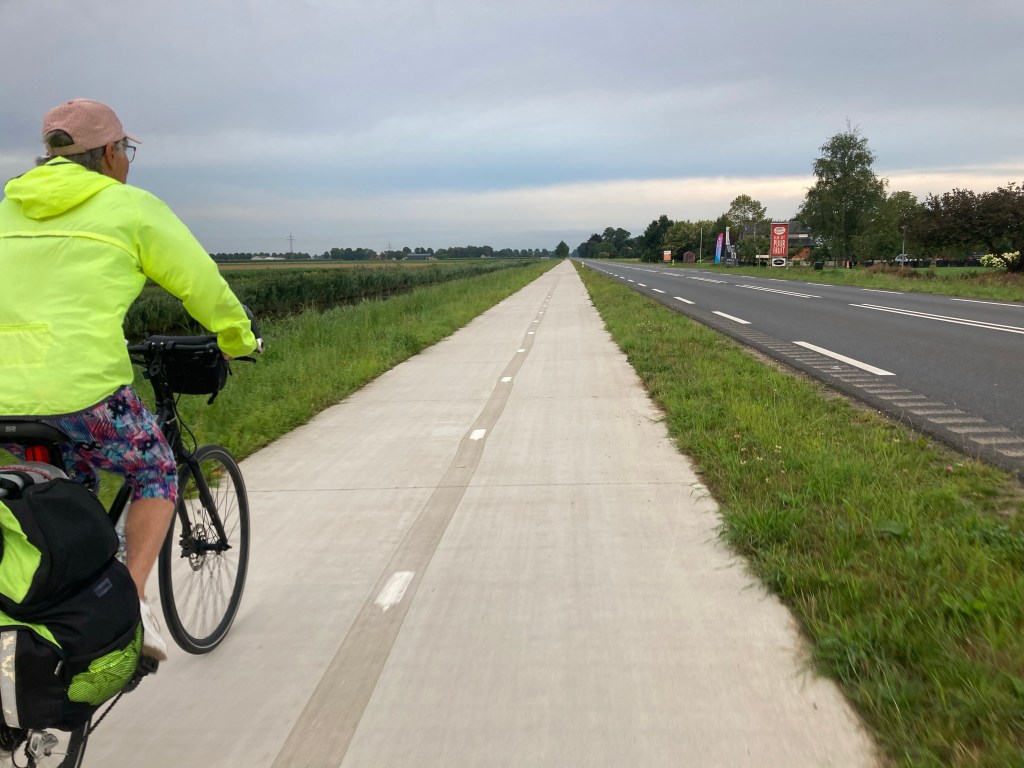
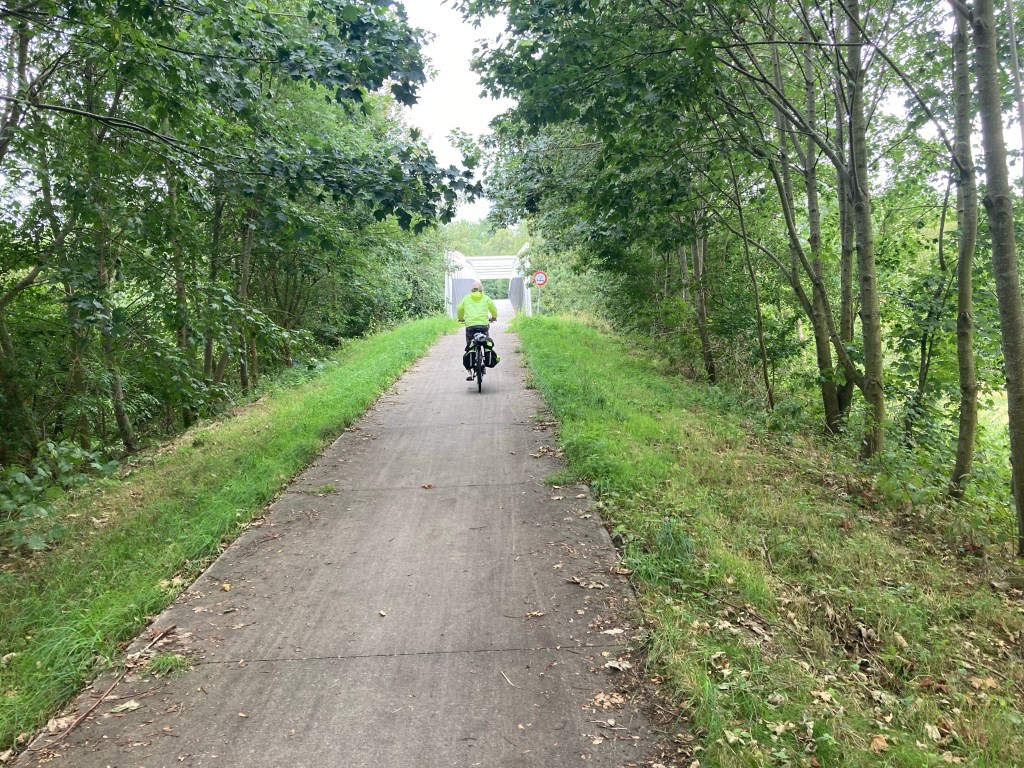
Showers are expected around midday so we were pleased we had decided not to have breakfast at the hotel. Just a cup of tea and a banana and we were on the road by 6.30. We’ve got 60km to do today. The head wind that has plagued us every day hasn’t begun yet, it’s warm enough and the smooth concrete path just goes on forever🤗
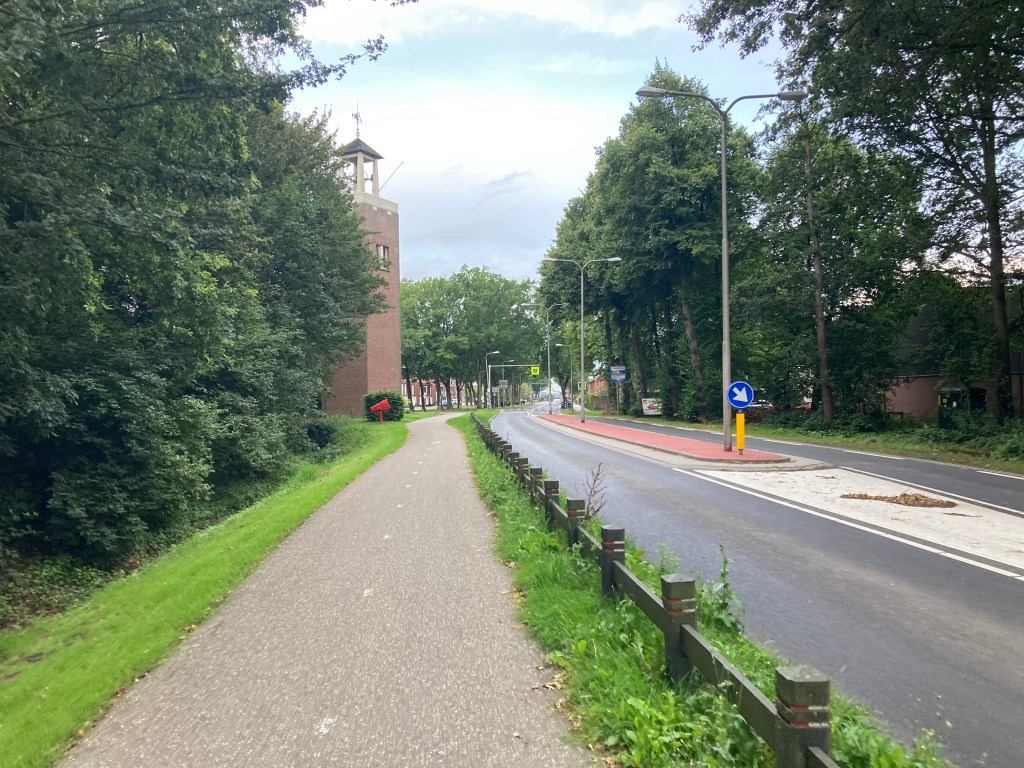
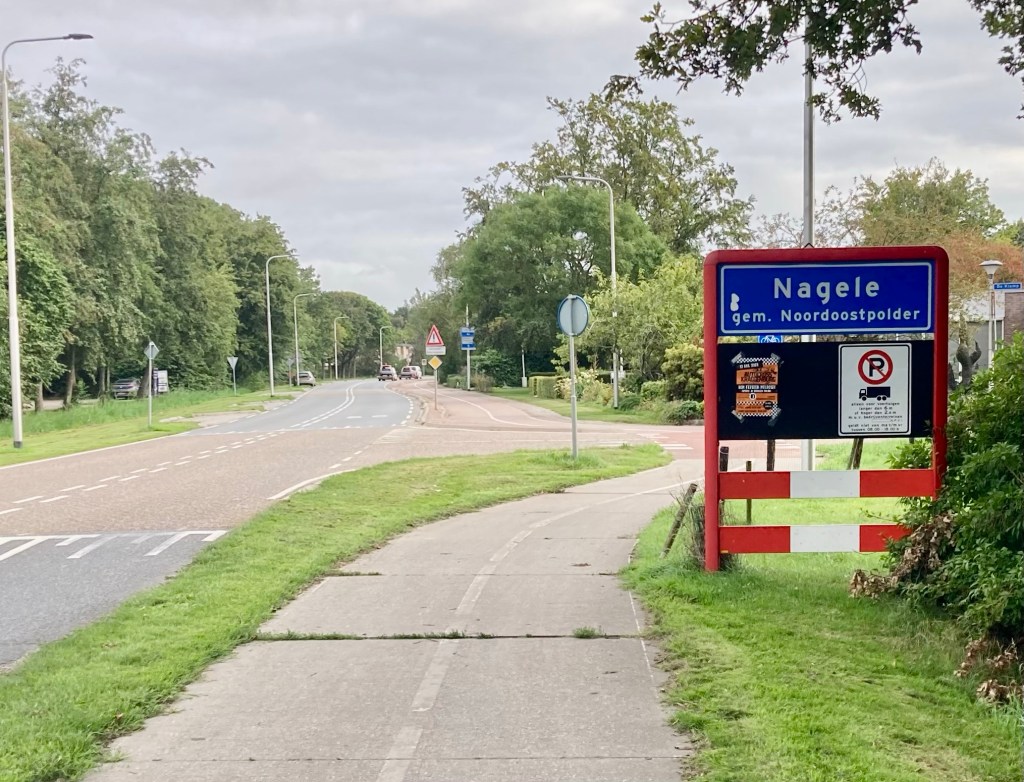
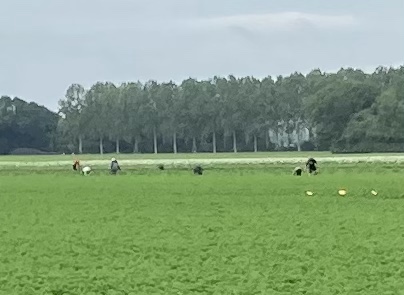
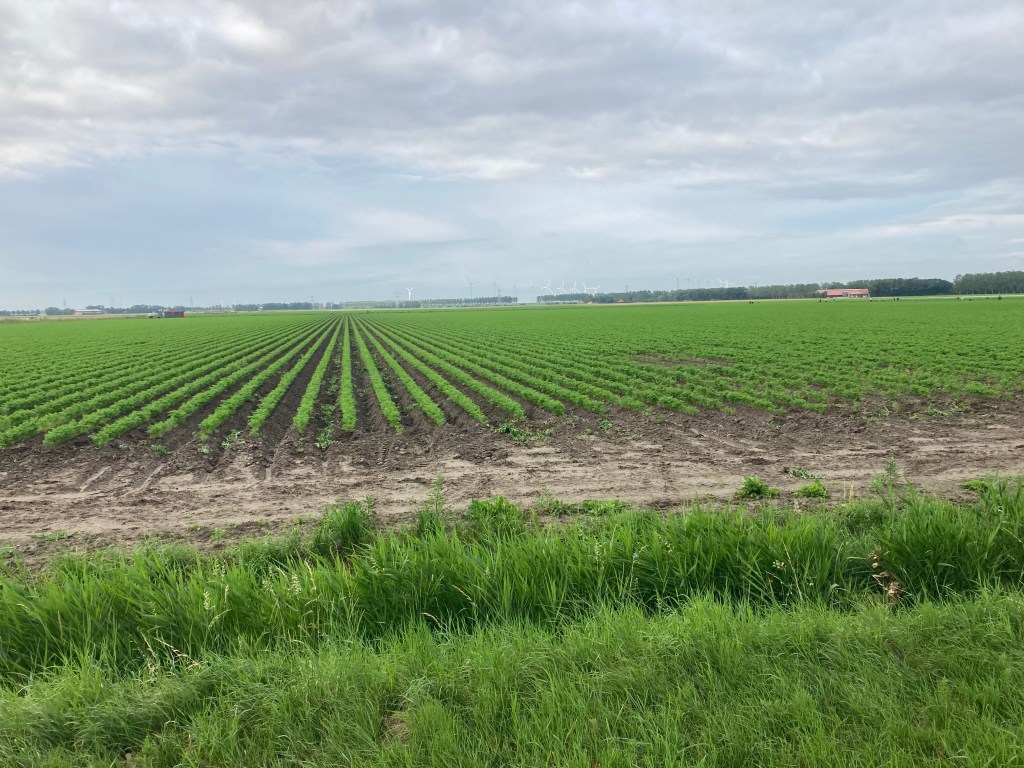
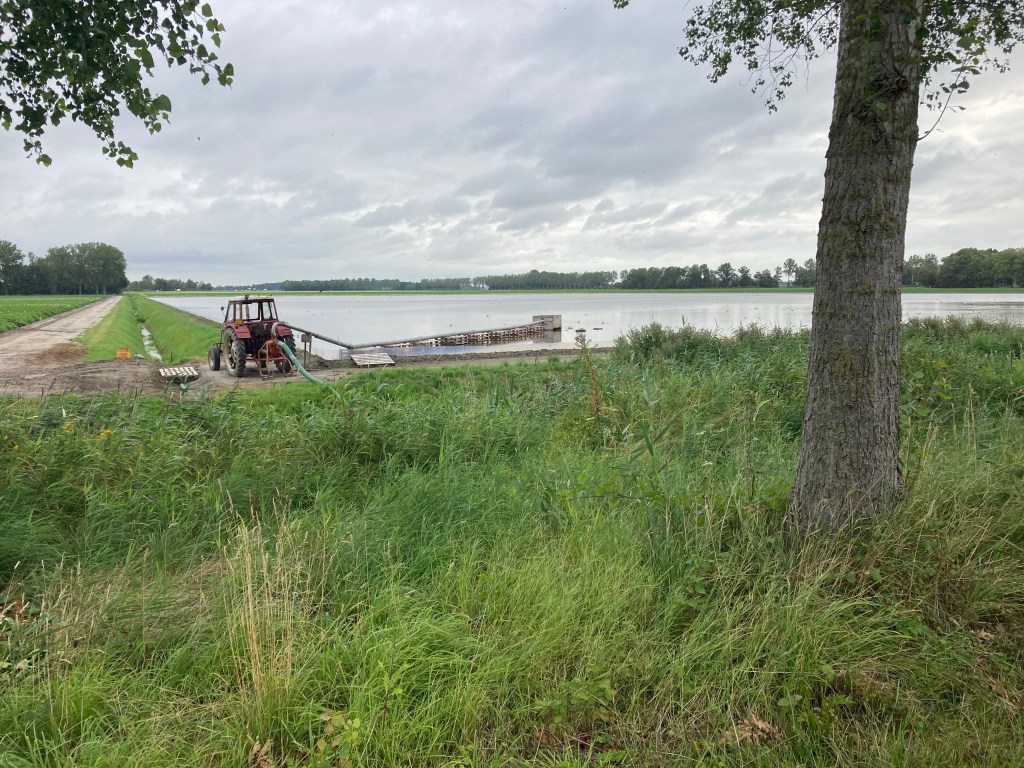
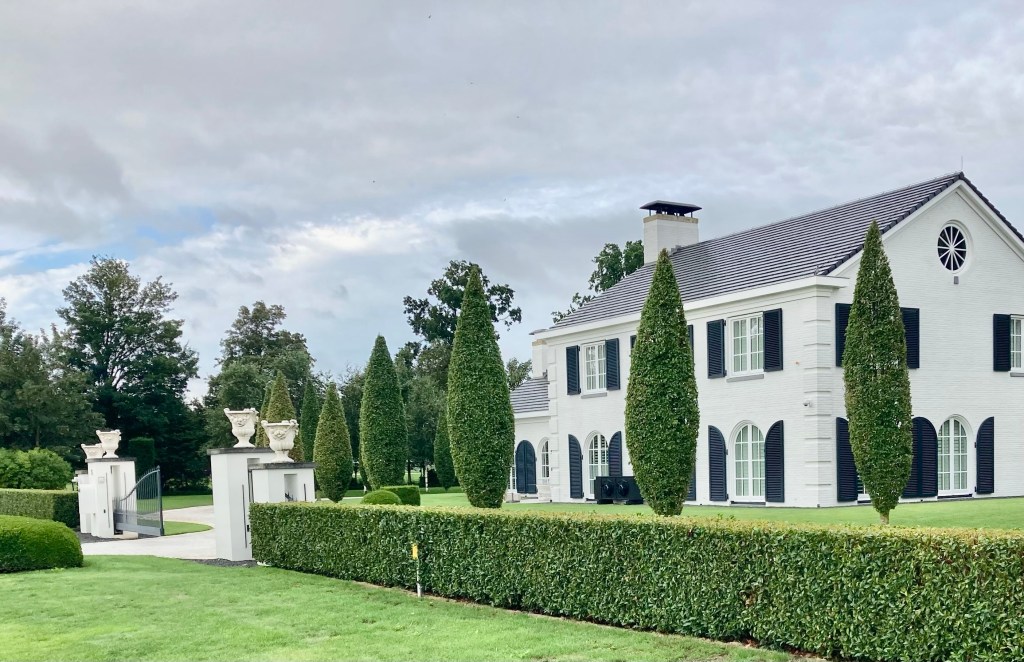
It must be lucrative though judging by some of the houses we’ve seen.
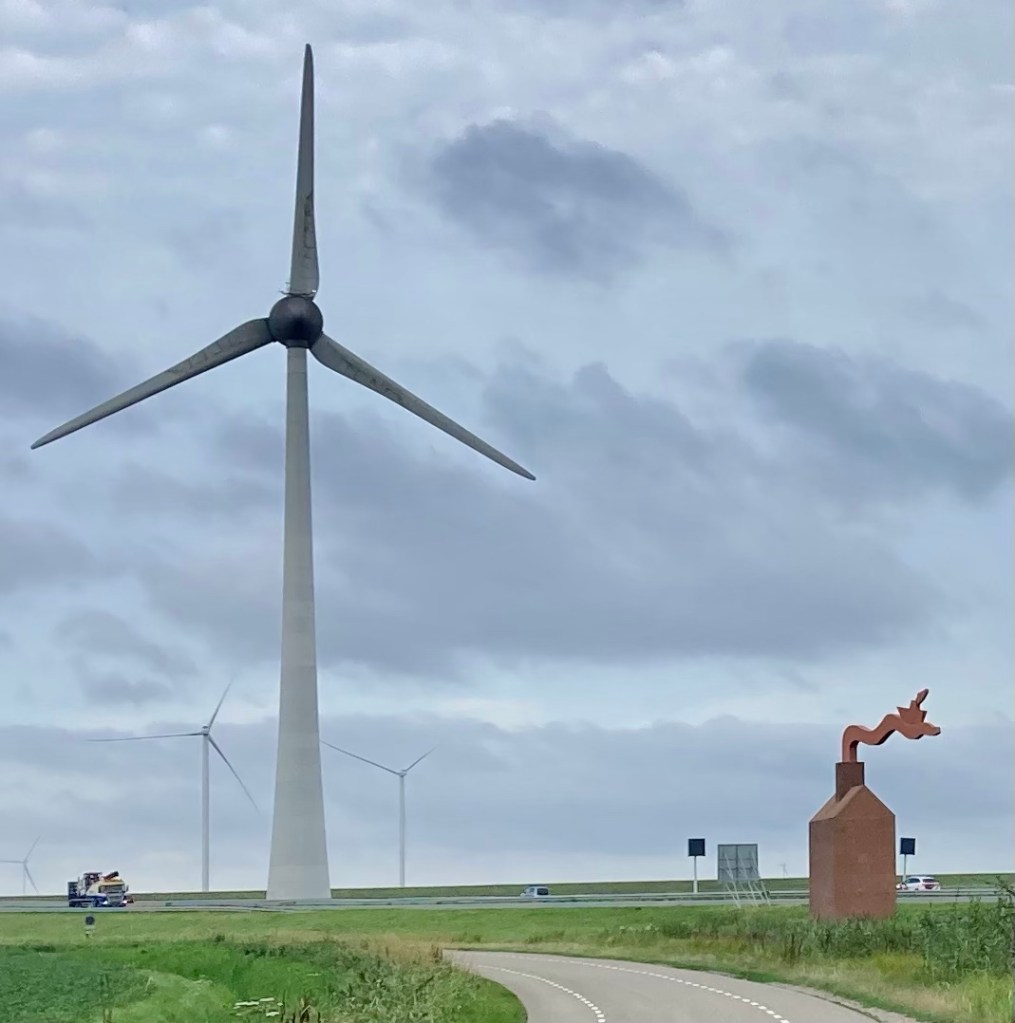
What is this FLEVOLAND ? We’ll it’s the 12th and newest province of Holland . Back before the Isselmeer was formed by the mammoth dyke across by the North Sea end , this was the Zuiderzee. The whole of the province was in actual fact just a shallow bay of the sea. Then along came an engineer with a great vision, Cornelius Lely. He designed and had built the enormous Dykes that would enclose this, the largest polder in the world.
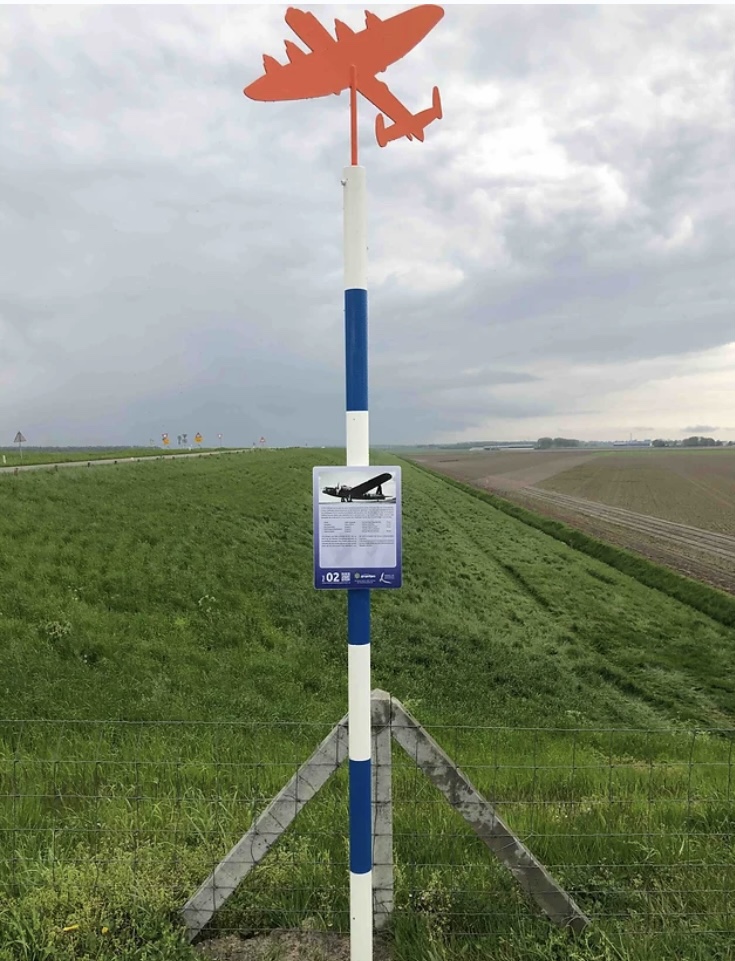
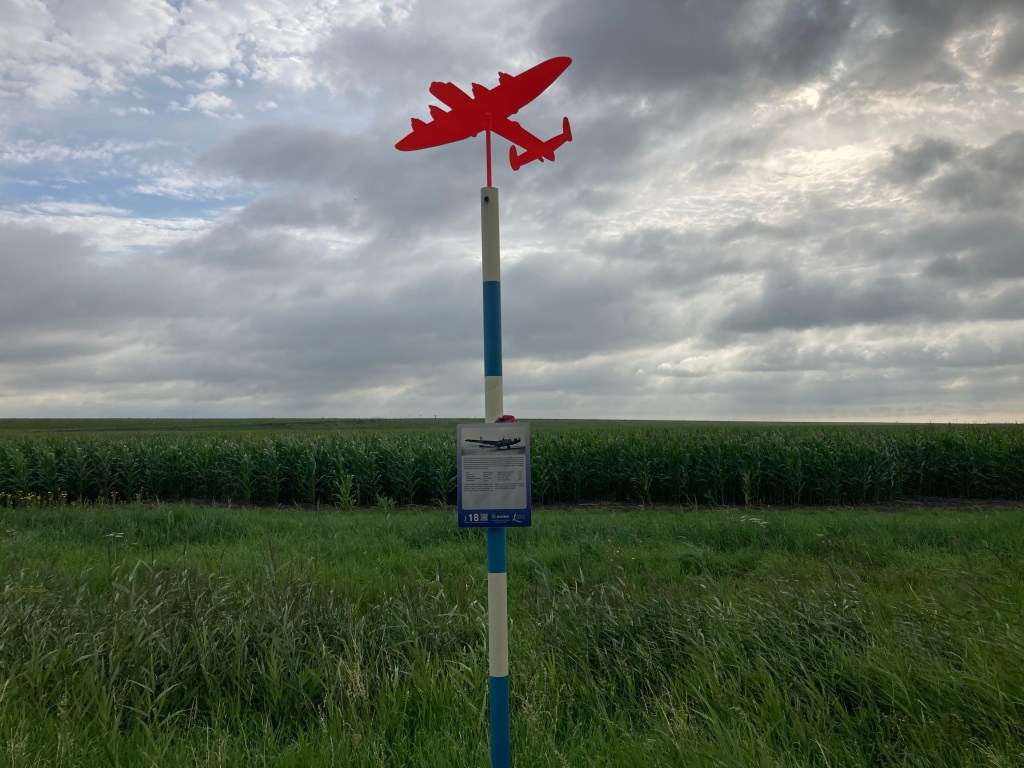
When they were draining the Eastern end of the polder there were all manner of surprises. Ship wrecks that dated back 400 years , a glimpse into a civilisation that dated back 5,500 years ago when they found the well preserved body of a young woman from the Swifterbant culture , and from more recent times, they dug up 19 crashed bombers ! This is in East Flevoland alone !
There’s is now a society that promotes the ‘crash trail’ a sign like these where the plane crashed and when you scan the barcode it tells you the name of the crew, rank and age. Incredible!
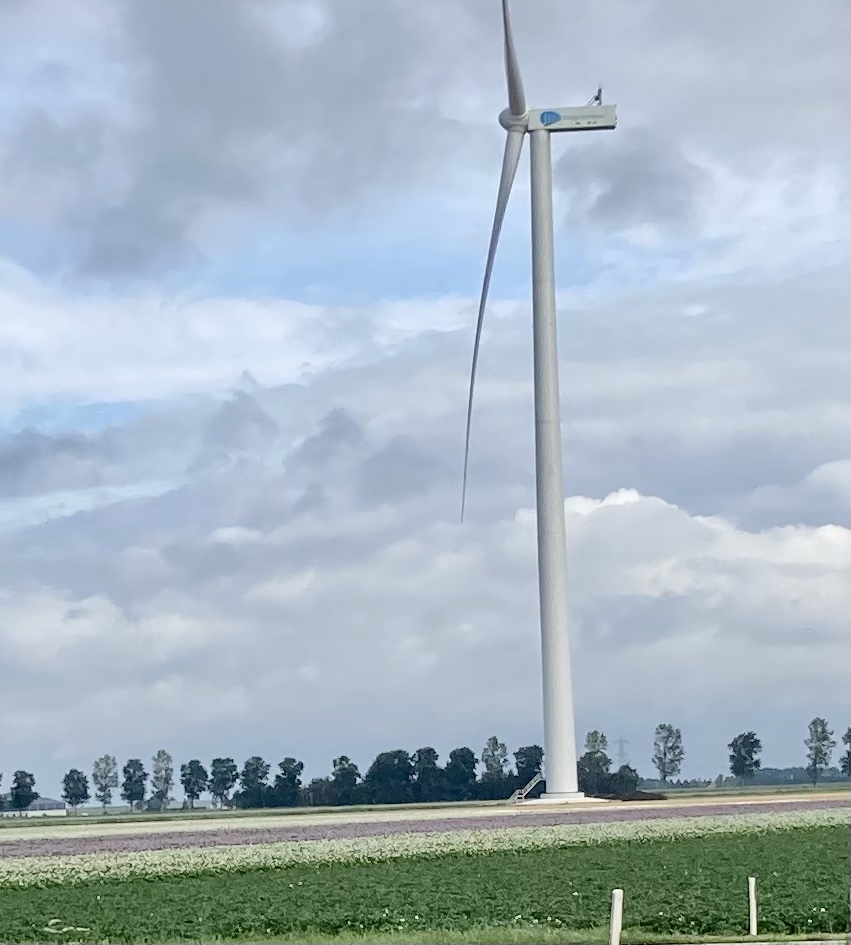
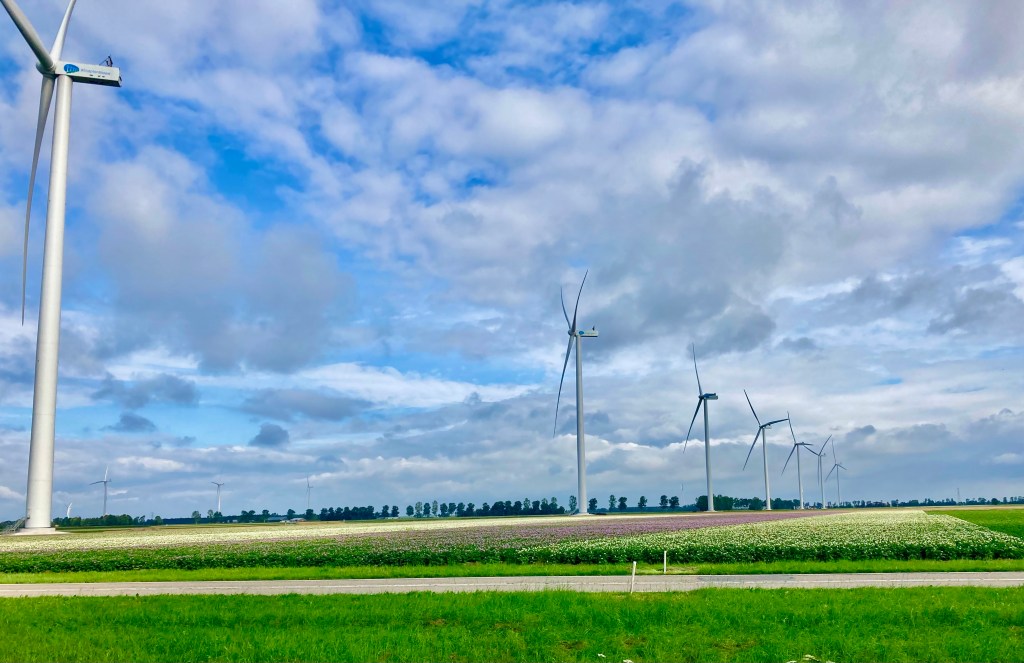
It was impossible to capture this scene on film properly. Rows and rows of wind turbines above fields of potatoes , some red, some white some still green . No sound except the whoosh whoosh whoosh of the blades. Beautiful, I’d go so far as to say a religious experience. Flevoland has so many wind turbines that it exports nearly as much as it uses from these fields.
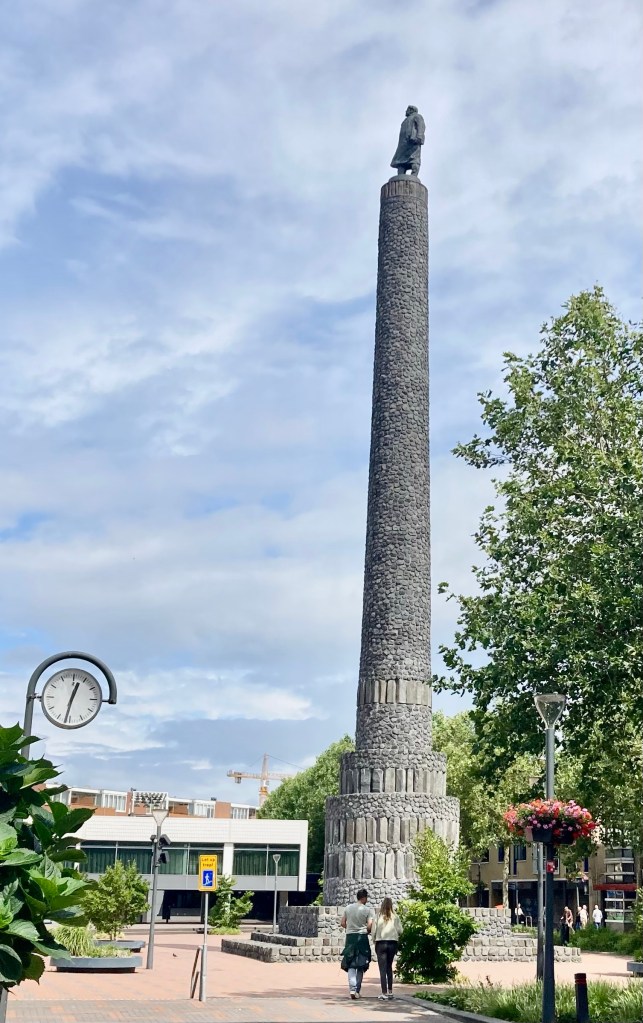
This statue of old Cornelius Lely stands so high so that he can gaze upon the land he created. The basalt rock it’s made of is the rock that lined the dykes ( all bought down from Germany )
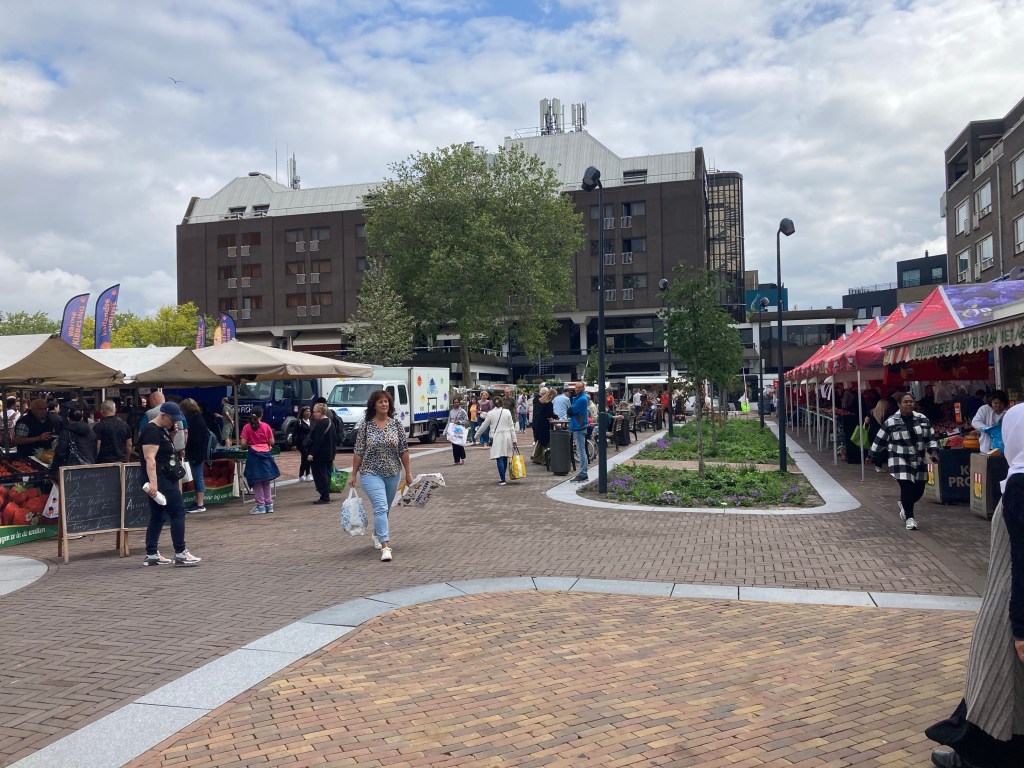
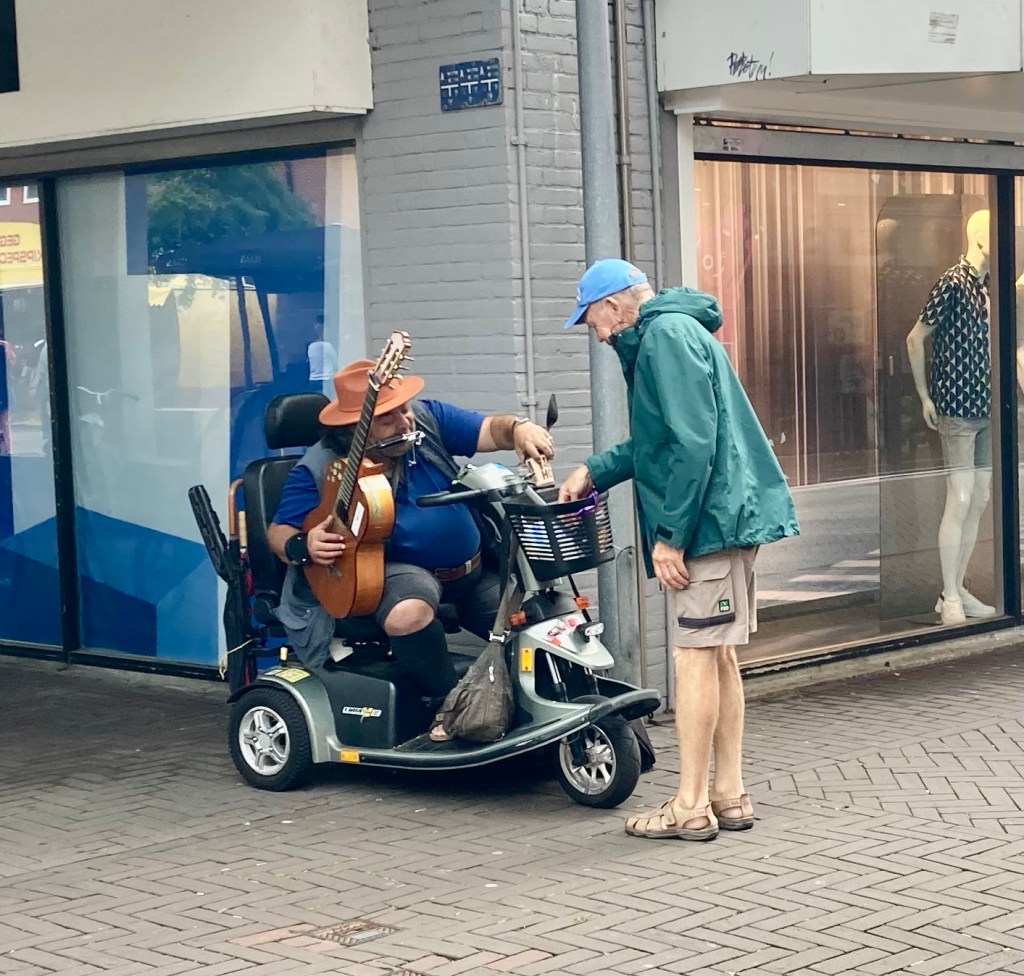
There was a Saturday market in the town square. This busker got tips for ‘trying hard’

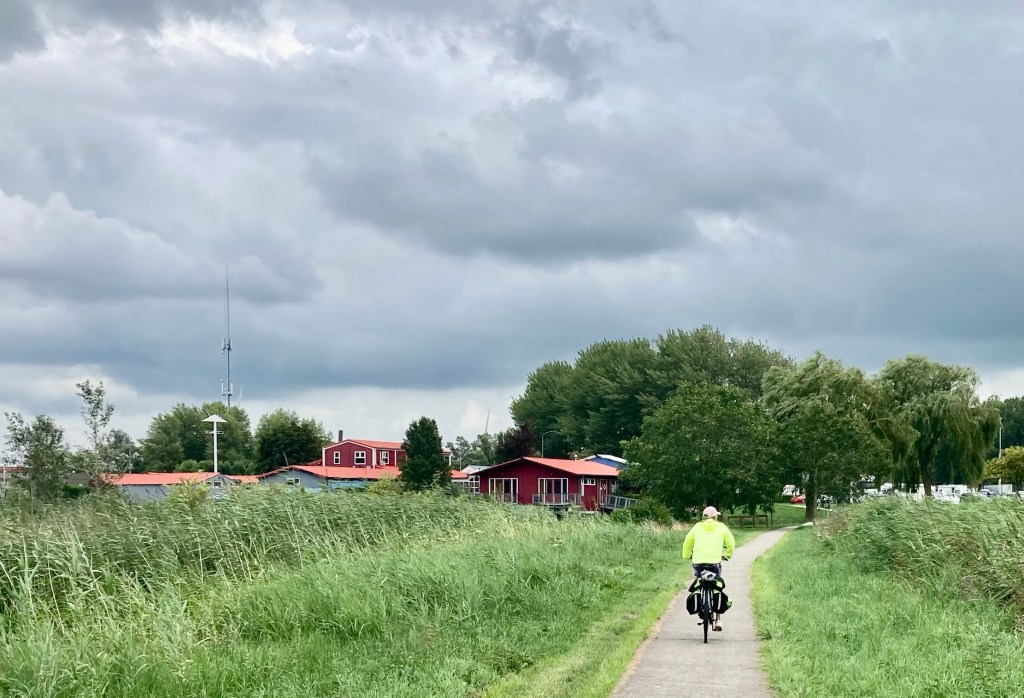
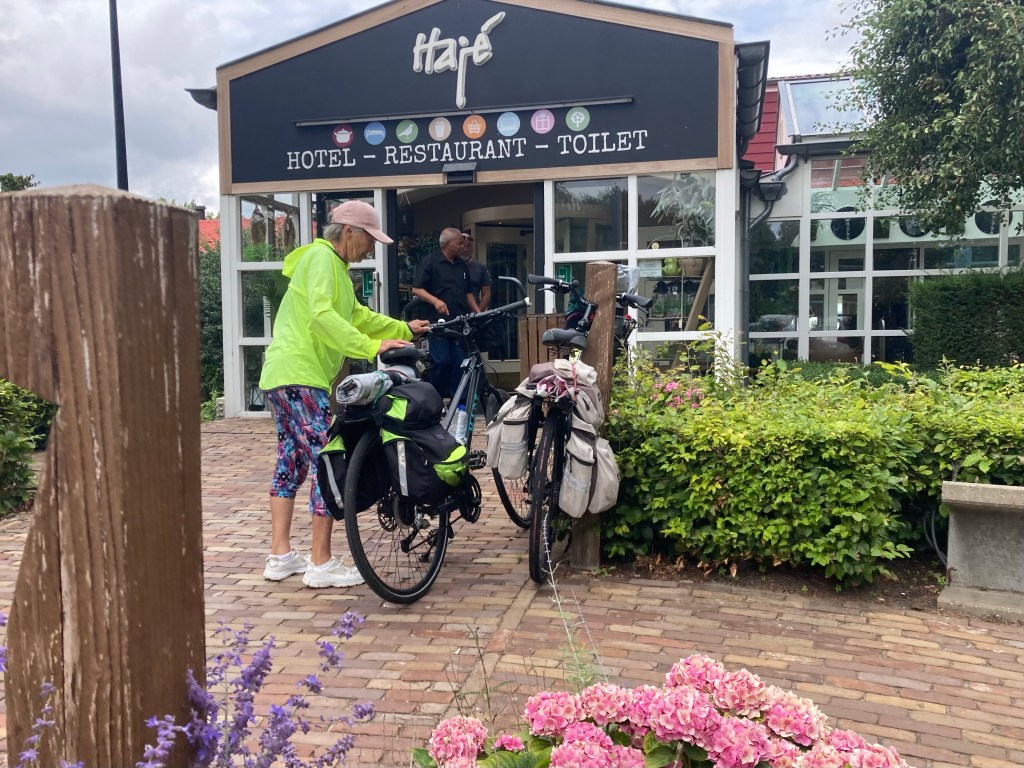
Although we came in the back door so to speak, the hotel fronted onto the A6 and was very busy. This will be our last night on the road before Amsterdam tomorrow

 Paris to Paris